


Skip to content
TechieNext home

UI/UX Design

Design that makes complex products feel simple.

Research, product design and design systems for teams building serious software. We design what engineers can build and what users understand on the first try.

Complexity leaks into the interface.

When products grow feature by feature, users pay for it: crowded screens, inconsistent patterns and workflows that need a training manual.

  • Users drop off in the flows that matter most
  • Every team designs the same component differently
  • Design and engineering argue over what is feasible

Research the work, prototype the hard parts, systematize the rest.

We watch real users do real tasks, prototype the riskiest flows first, and turn what works into a design system engineering adopts as code.

  1. 1Research

    • User interviews
    • Product analytics
  2. 2Define

    • Journeys
    • Information architecture
  3. 3Design

    • Prototypes
    • Usability tests
  4. 4Scale

    • Design system
    • Coded components
Design work that ends in shipped components.

What we deliver.

The ui/ux design work we take on, from the first release to years of evolution.

Product discovery
Shape what to build with interviews, workshops and rapid prototypes.
UX research
Usability studies, journey mapping and analytics reviews that ground decisions in evidence.
Interaction design
Flows, states and micro-interactions for complex, data-heavy products.
Visual design
Interfaces with a clear hierarchy and a brand that feels considered.
Design systems
Tokens, components and documentation that keep many teams consistent.
Usability testing
Moderated and unmoderated tests before code is written, and after launch.

Our usual stack

A starting point, not a rule. We choose per problem.

Explore our technologies
Design
  • Figma
  • FigJam
  • Framer
Research
  • Maze
  • Dovetail
  • Hotjar
Systems
  • Storybook
  • Design tokens
Handoff
  • Figma Dev Mode
  • Zeroheight

How we deliver.

Every engagement follows the same six steps, scaled to the size of the problem.

  1. 01

    Discover

    Understand the business, users and goals.

    1–3 weeks

  2. 02

    Define

    Architecture, strategy and product roadmap.

    1–2 weeks

  3. 03

    Design

    UX, UI and interaction systems.

    2–6 weeks

  4. 04

    Build

    Engineering, integrations and infrastructure.

    8–24 weeks

  5. 05

    Launch

    QA, deployment and analytics.

    1–2 weeks

  6. 06

    Scale

    Optimization, iteration and growth.

    Ongoing

See how each step works

Live products where this work played a part.
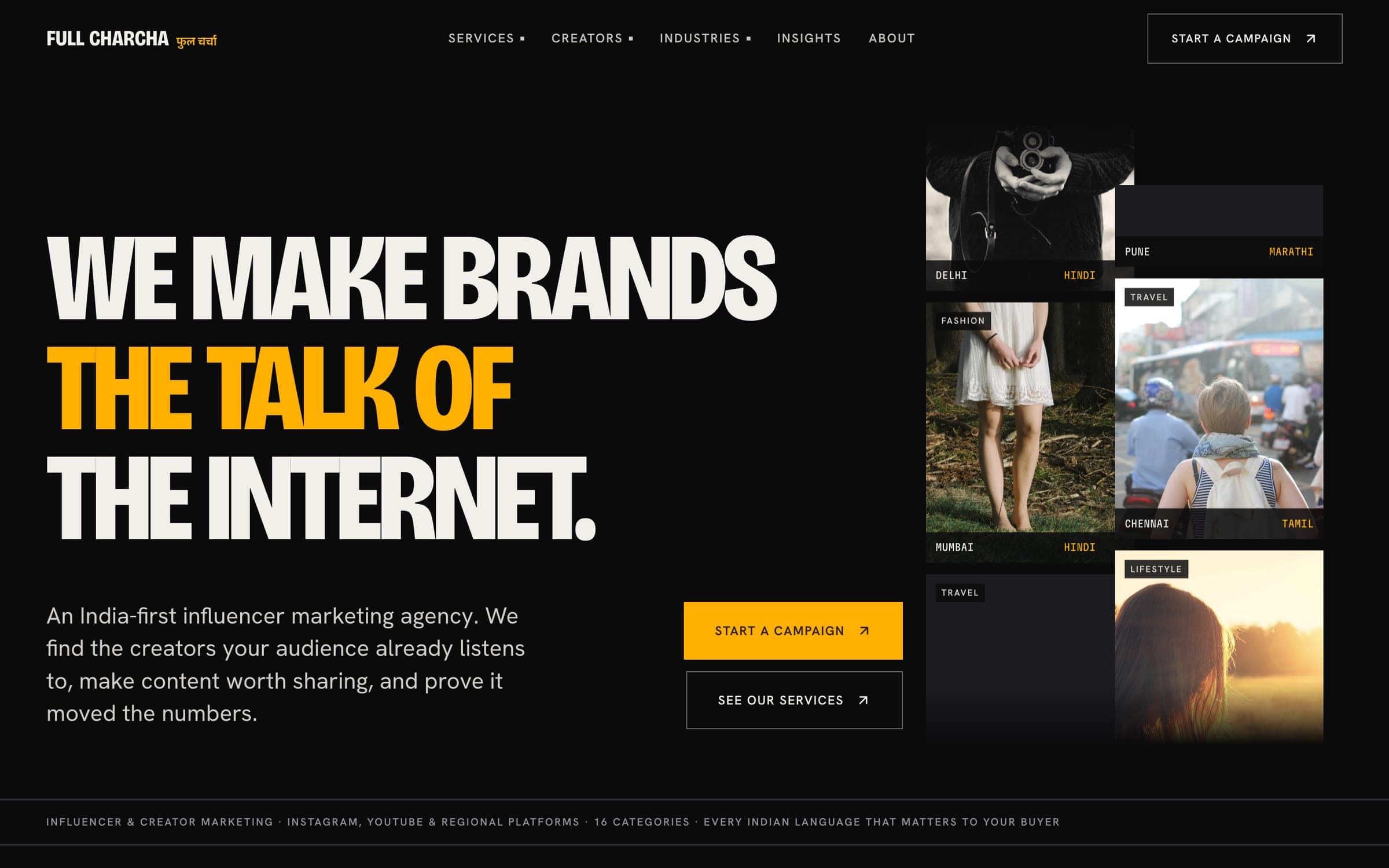
The FullCharcha home page: “We make brands the talk of the internet.” in bold type beside creator photos tagged by city and language
FullCharcha on a phone, with its headline and a Start a campaign button
MediaAgency website

FullCharcha

A bold website for an India-first influencer agency

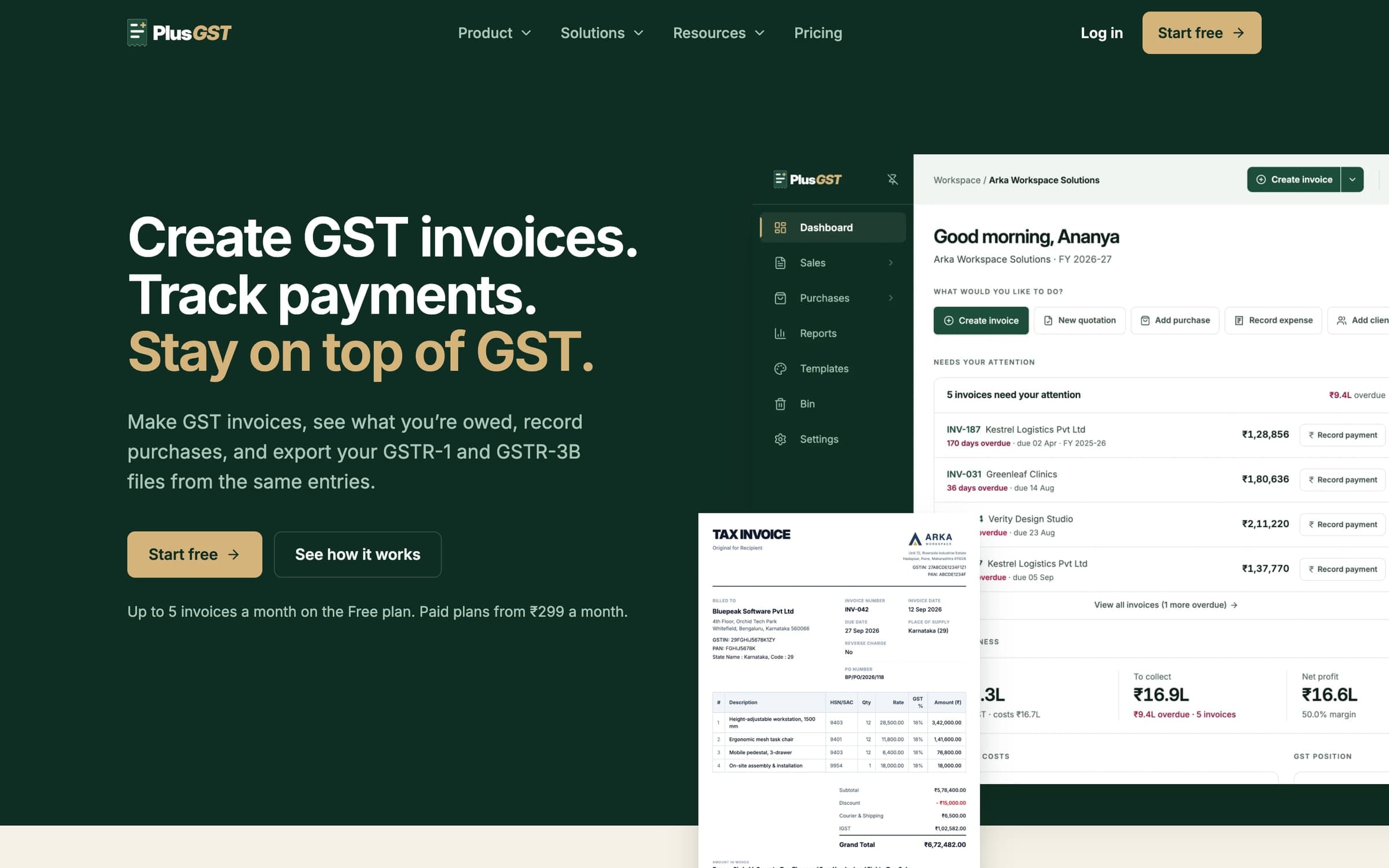
The PlusGST home page: “Create GST invoices. Track payments. Stay on top of GST.” beside a preview of the invoicing dashboard
PlusGST on a phone, with its headline and a Start free button
FintechGST invoicing SaaS

PlusGST

GST invoicing and bookkeeping for small businesses

Questions, answered.

The things clients usually ask before we start. Anything else, just ask.

Ask us something else
Do you only design, or also build?

Both. Our designers work in the same team as our engineers, so designs ship as working software instead of stopping at a prototype.

Can you work with our existing brand?

Yes. We extend your brand into a product language: type, color, spacing and components that hold up across complex screens.

How do you test designs?

With real users, early. We test clickable prototypes with five to eight people per round, which reliably surfaces the biggest problems before engineering starts.

What do we receive at the end?

Research findings, prototypes, final designs in Figma and, where we build it too, a coded and documented component library.