
Skip to content
TechieNext home

Software Development

Custom software, engineered to outlast the roadmap.

We design and build the platforms, internal tools and integrations your operations depend on, with an architecture that keeps change cheap long after launch.

Off-the-shelf stopped fitting.

Most growing businesses hit the same wall: spreadsheets and SaaS tools stitched together with manual work, legacy systems nobody wants to touch, and a backlog that grows faster than the team can clear it.

  • Critical workflows depend on manual handoffs
  • Legacy code makes every change slow and risky
  • Systems don’t share data, so nobody trusts the numbers

Architecture first, then small, shippable increments.

We start with the domain: how work really flows through your business. Then we design a modular architecture, test the riskiest assumptions early, and ship in two-week increments behind feature flags, with automated tests and observability from the first sprint.

  1. 1Inputs

    • Business workflows
    • Existing systems
  2. 2Design

    • Domain model
    • Architecture records
  3. 3Build

    • Services & APIs
    • Automated tests
  4. 4Run

    • CI/CD pipeline
    • Observability
How a custom platform moves from workflow to production.

What we deliver.

The software development work we take on, from the first release to years of evolution.

Custom platforms
Multi-tenant SaaS, marketplaces and operational platforms shaped around your exact workflows.
Legacy modernization
Incremental rewrites that replace old systems piece by piece, without a risky big-bang cutover.
APIs & integrations
Documented APIs and dependable integrations with ERPs, CRMs, payment and identity providers.
Internal tools
Back-office software that removes manual work from approvals, reporting, data entry and operations.
Data & reporting
Pipelines and dashboards that give leadership numbers they can act on.
Quality engineering
Automated tests, code review and performance budgets built into every sprint, not bolted on at the end.

Our usual stack

A starting point, not a rule. We choose per problem.

Explore our technologies
Frameworks
Infrastructure

How we deliver.

Every engagement follows the same six steps, scaled to the size of the problem.

  1. 01

    Discover

    Understand the business, users and goals.

    1–3 weeks

  2. 02

    Define

    Architecture, strategy and product roadmap.

    1–2 weeks

  3. 03

    Design

    UX, UI and interaction systems.

    2–6 weeks

  4. 04

    Build

    Engineering, integrations and infrastructure.

    8–24 weeks

  5. 05

    Launch

    QA, deployment and analytics.

    1–2 weeks

  6. 06

    Scale

    Optimization, iteration and growth.

    Ongoing

See how each step works

Live products where this work played a part.
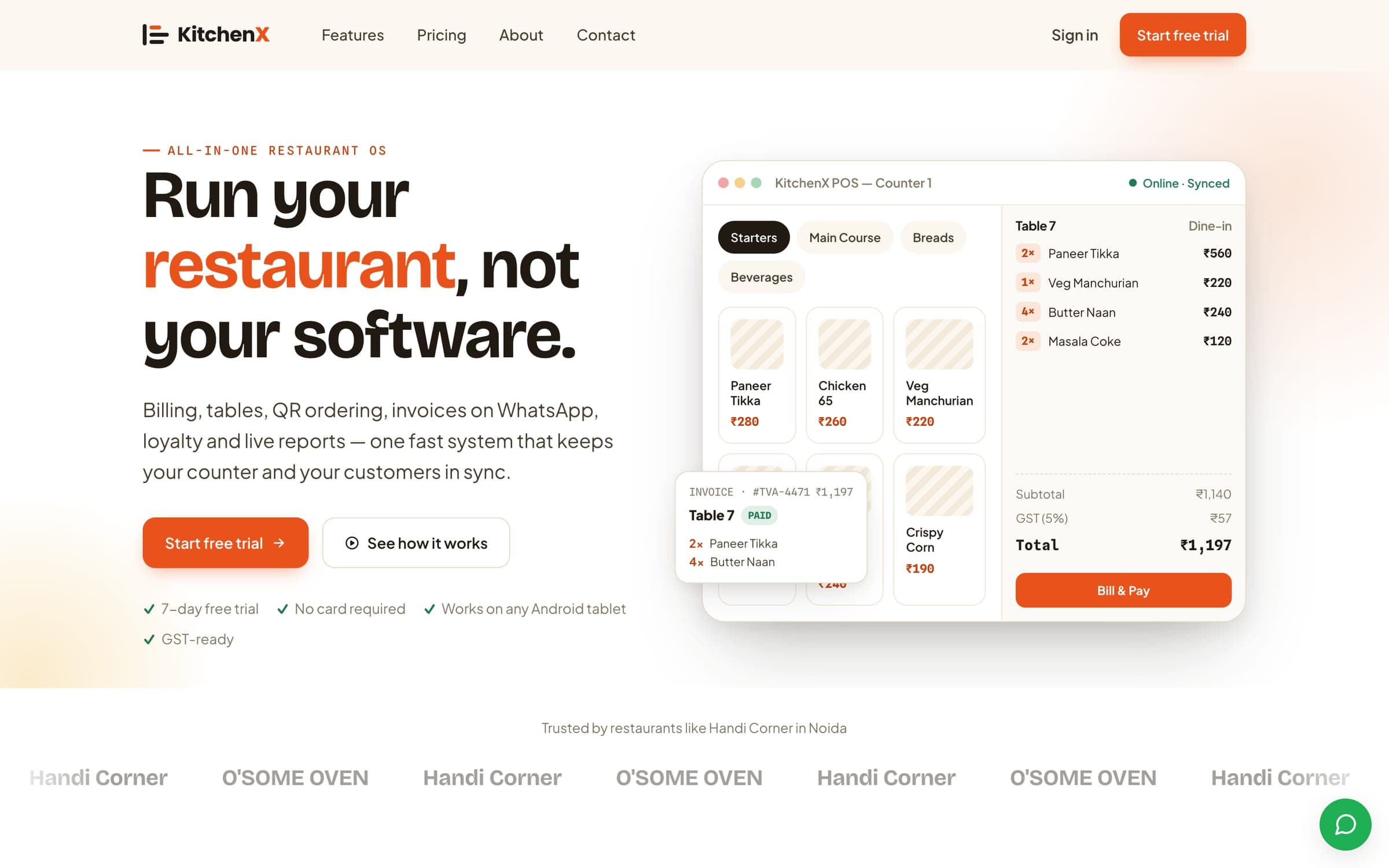
The KitchenX home page: “Run your restaurant, not your software.” beside the POS billing screen for a dine-in table
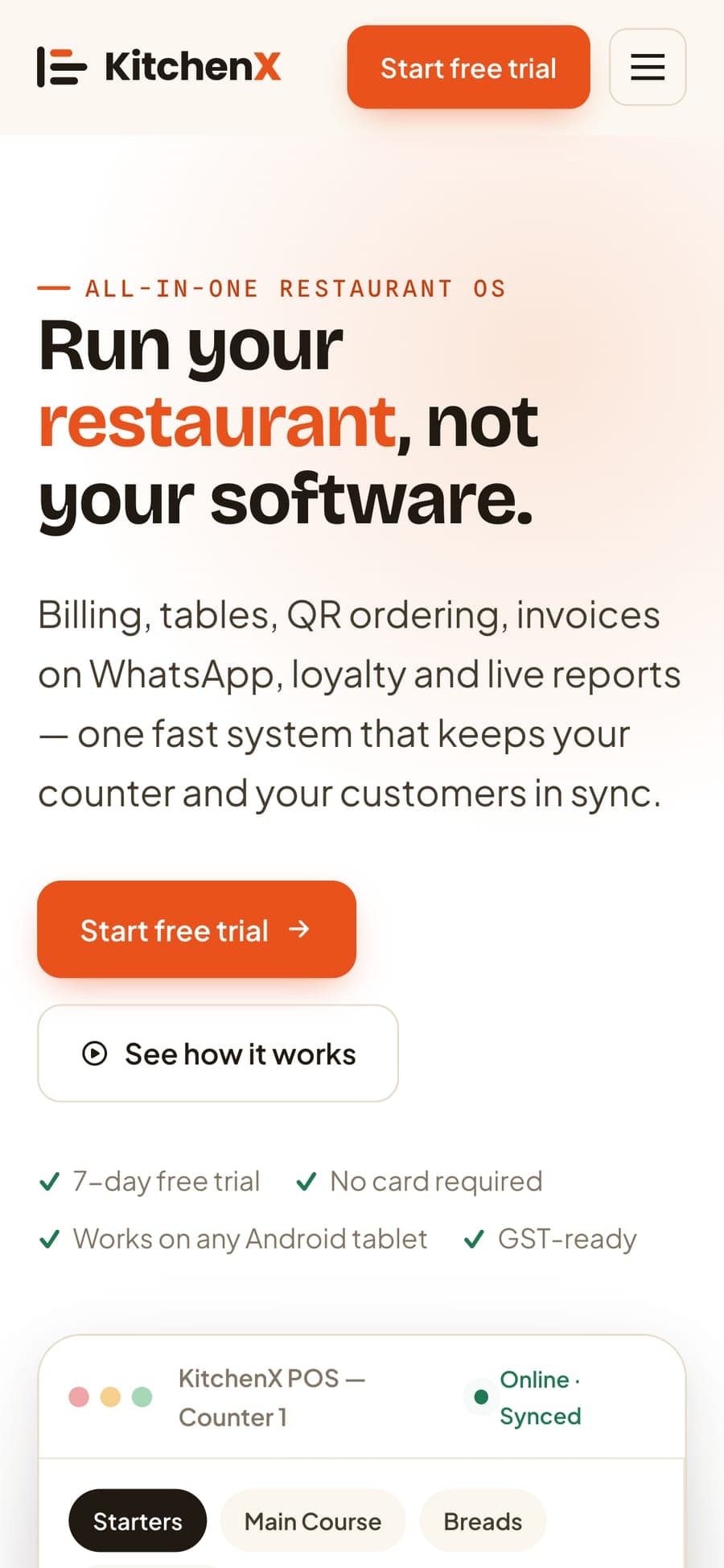
KitchenX on a phone, with its headline and a Start free trial button
SaaSRestaurant POS

KitchenX

An offline-first restaurant POS for India

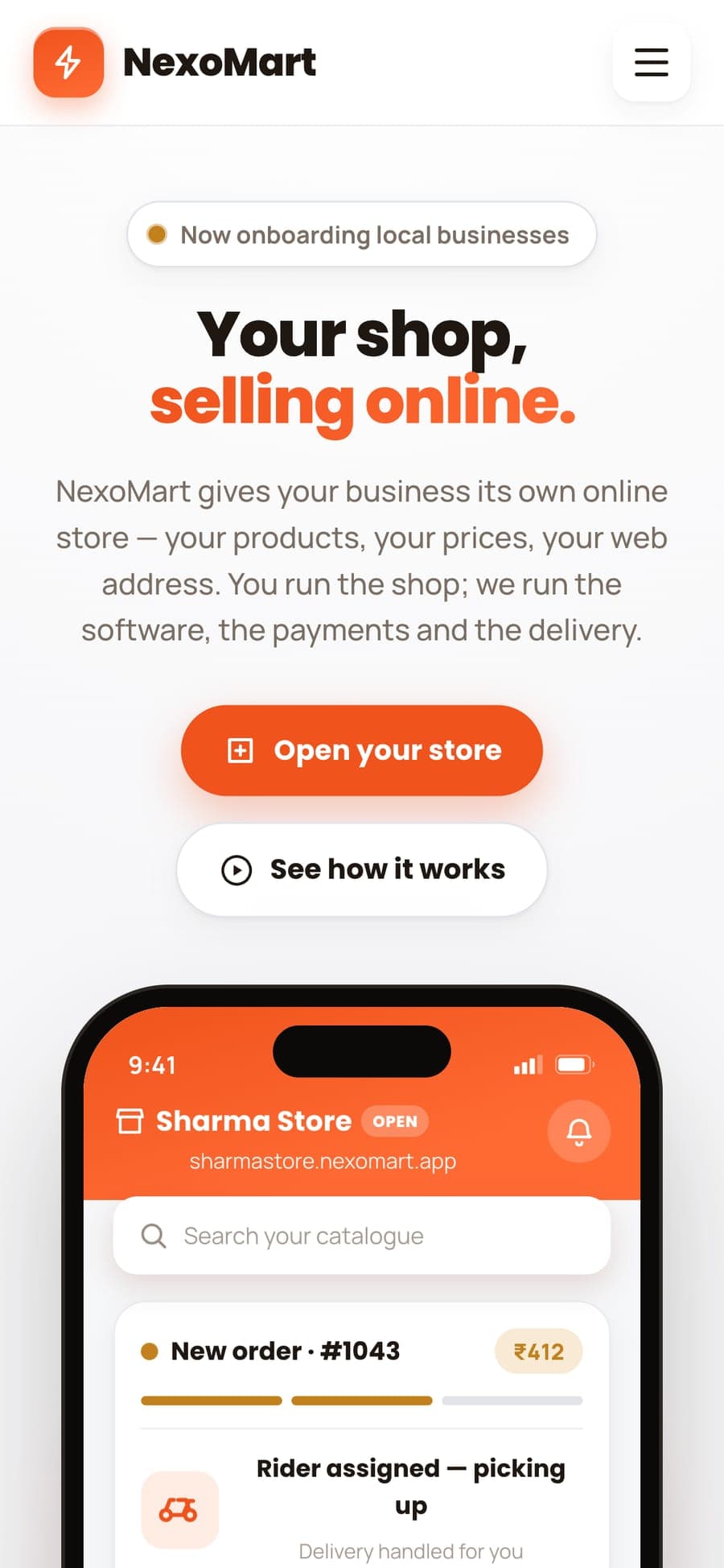
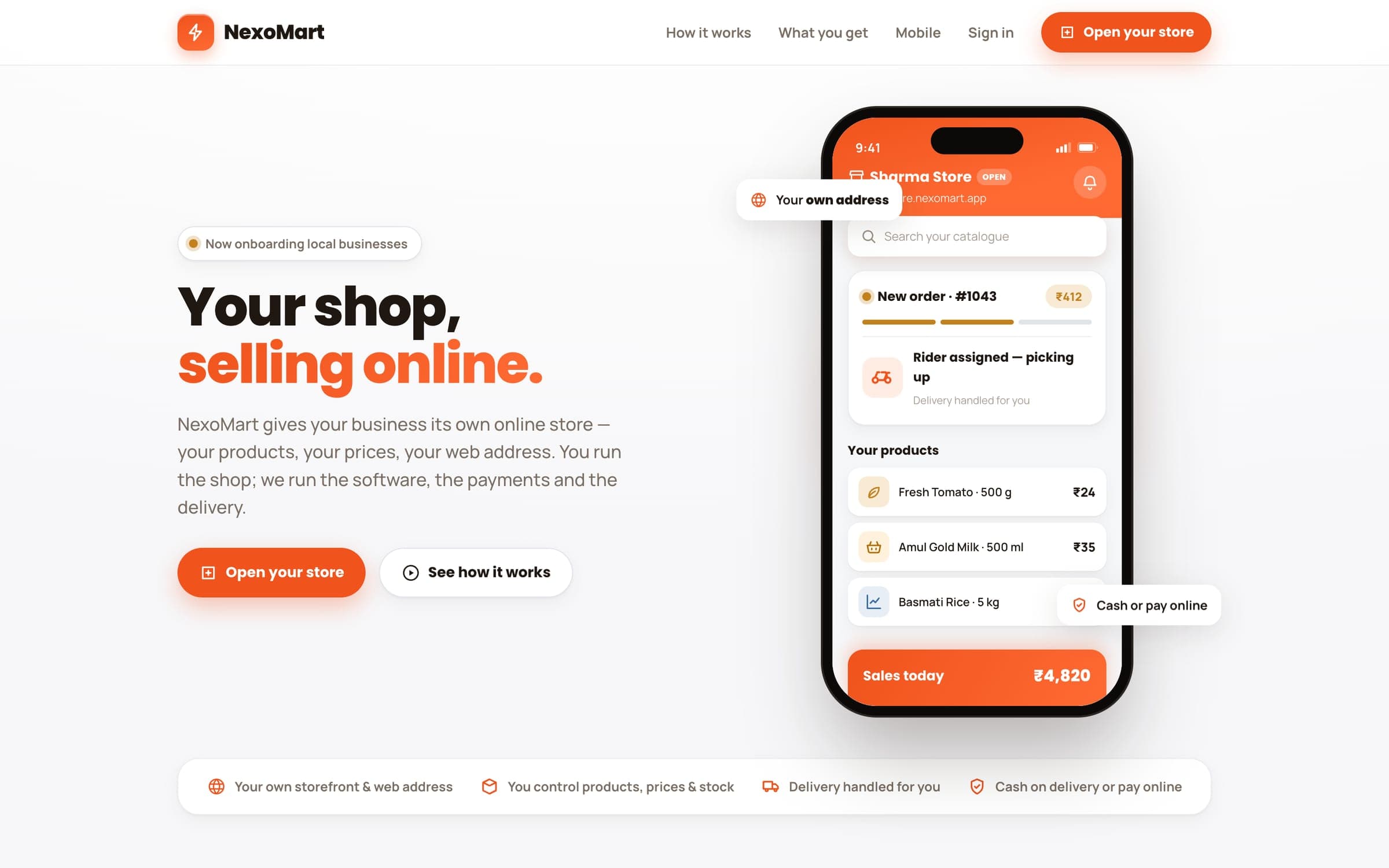
The NexoMart home page: “Your shop, selling online.” beside a phone showing a shop’s storefront, a new order and a rider on the way
NexoMart on a phone, with its headline and an Open your store button
E-commerceCommerce platform

NexoMart

Online stores, payments and delivery for local shops

Questions, answered.

The things clients usually ask before we start. Anything else, just ask.

Ask us something else
How do you estimate a custom software project?

We start with a short discovery phase, usually two to three weeks, to map workflows, integrations and risks. It produces a scoped roadmap with a fixed price for the first release and clear assumptions for everything after it.

Can you work with our existing codebase?

Yes. Most engagements start with an existing system. We audit it first, agree what to keep, and modernize incrementally so the business keeps running throughout.

Who owns the code?

You do. Source code, infrastructure definitions and documentation are yours from the first commit, in repositories you control.

How do you keep quality high as the project grows?

Every change goes through code review, automated tests and a staging environment. We track performance and error budgets, so quality is measured rather than assumed.